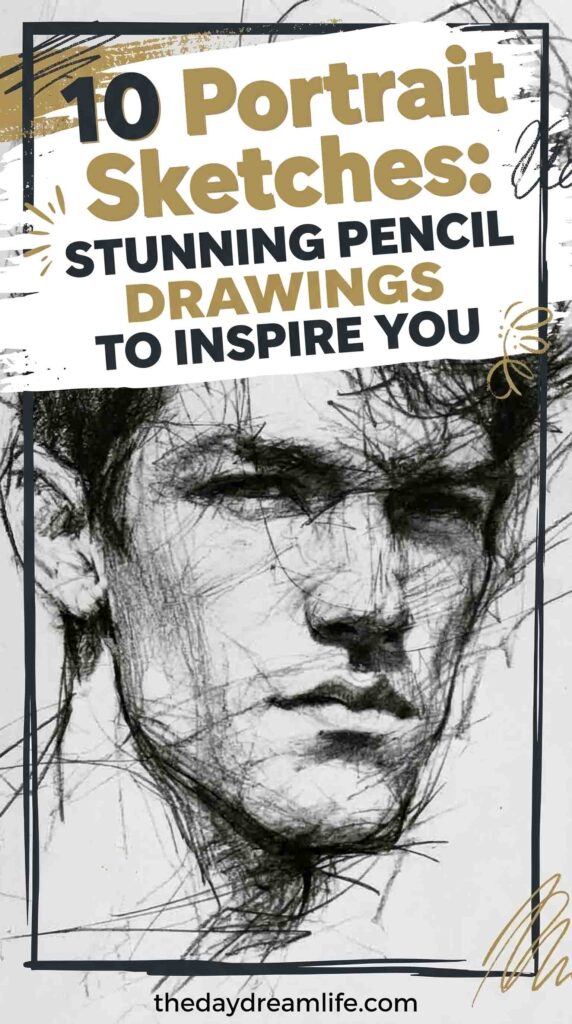
Are you looking for some amazing portrait sketches? We have 10 artistic portrait sketches to give you that boost of inspiration you need!
There’s something captivating about a portrait sketch that doesn’t try to be perfect, the scribbled hair, the loose crosshatched shadows, the lines that seem to search for the face rather than carefully outline it.
These are the sketches that make you want to pick up a pencil yourself, because you can practically feel the artist’s hand moving across the page.
That’s the spirit behind this roundup. I’ve gathered 10 portrait sketches that favour gesture, energy, and confident mark-making over polished realism, the kind of work that reminds you drawing doesn’t need to be tidy to be powerful.
If you are looking to loosen up your style, or try a different style altogether, then these 10 portrait sketches will help give you that direction you need in your drawing.
So grab a pencil, let your lines wander a little, and let’s dive in.
Number One
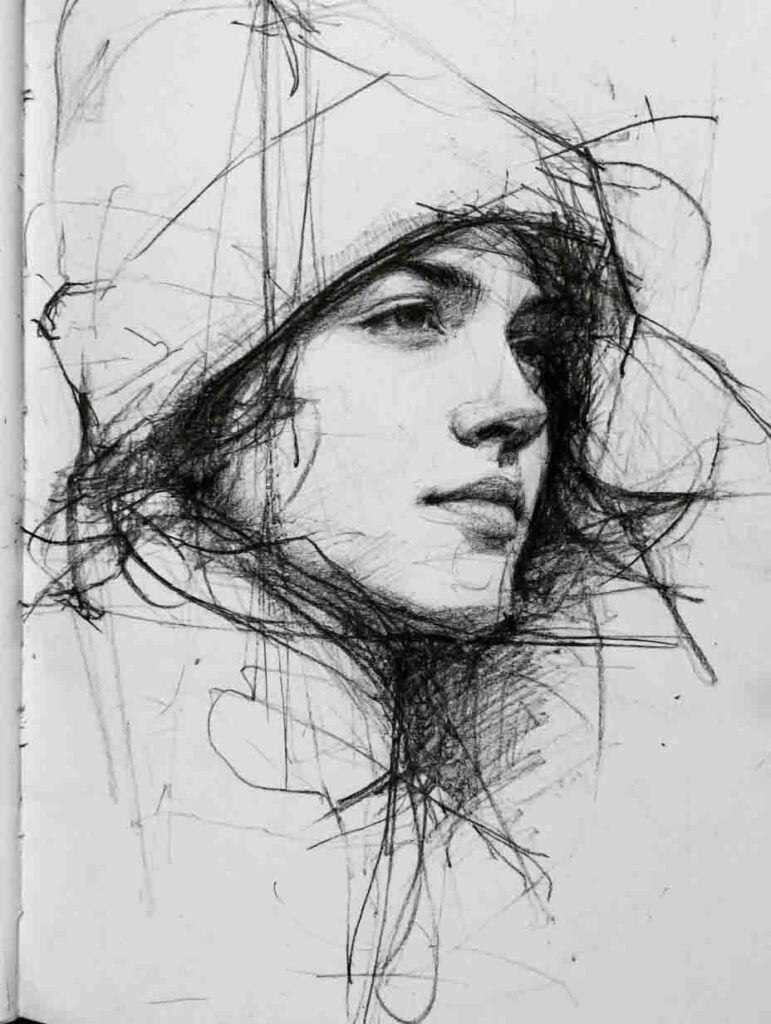
This first sketch balances careful detail with loose, energetic linework, which is the theme in all these sketches.
The face is softly shaded and realistic, while the hood and hair dissolve into scribbly, fast strokes that add movement to the piece.
Left-in construction lines and stray marks give it a raw, unfinished energy, yet the eyes stay quietly precise, anchoring the whole drawing and drawing your focus straight to the subject’s expression.
Number Two
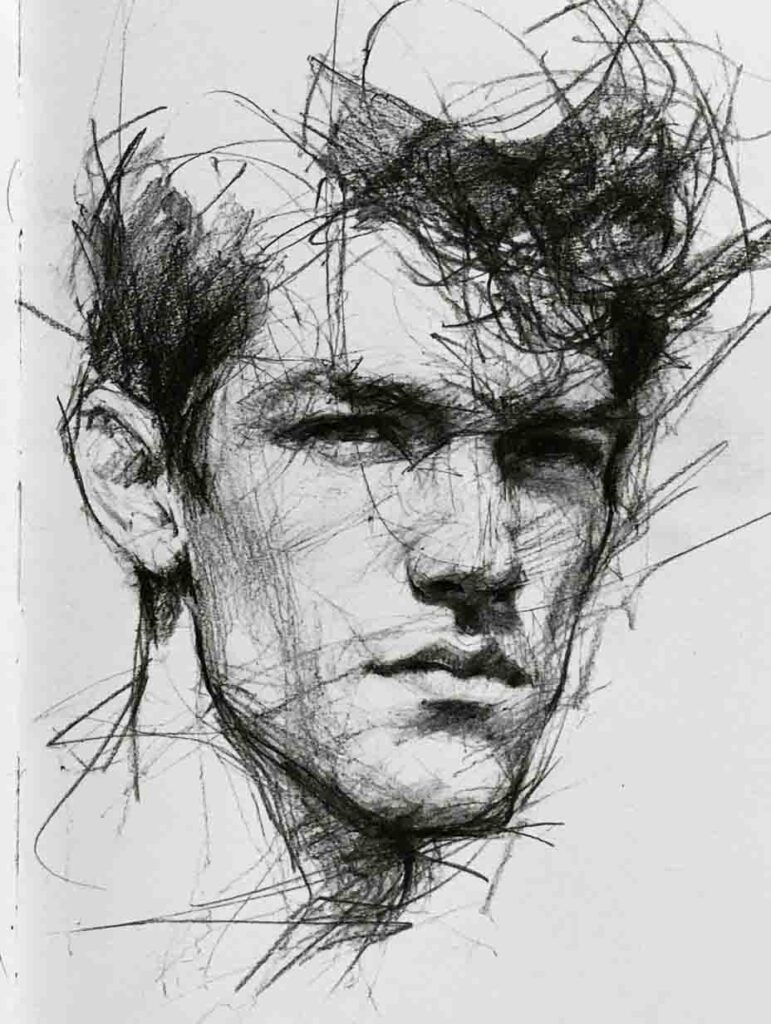
This portrait is all about contrast in texture, the wild, scratchy hair almost overtakes the page, while the face beneath it stays calm and composed.
Strong, confident lines define the jaw and brow, giving the subject a steady, direct expression despite the chaos surrounding it. I love the crosshatching used on the cheeks.
It’s a nice reminder that a few well-placed marks can carry just as much weight as a hundred scribbled ones.
Number Three
Drawn in profile, this sketch uses dense crosshatching to map out every wrinkle and contour with real sensitivity.
The layered lines build up naturally around the eyes and cheeks, giving the face a lived-in, weathered quality, while the looser scribbles in the background let the portrait breathe. It’s a great study in how repetition of simple strokes can create both texture and emotion.

Number Four
This sketch plays with contrast in technique, smooth, blended shading on the face against loose, scribbly strokes in the hair.
A lighter hand at sketching has been used on the face. The controlled lines around the eyes and lips sit in deliberate contrast to the fast, energetic marks elsewhere, showing how restraint in one area can make looser linework feel even more alive.

Number Five
A sketch that uses circular, looping strokes to build up the wild texture of the hair, layering them densely for shadow and leaving them looser at the edges to suggest movement.
The face, by contrast, relies on smooth tonal shading with minimal outlines, letting soft gradients do the work of defining the features. That mix of fast, gestural mark-making against quiet, careful shading gives the whole piece a real sense of movement.

Number Six
Here’s a rewrite with a different angle on the technique:
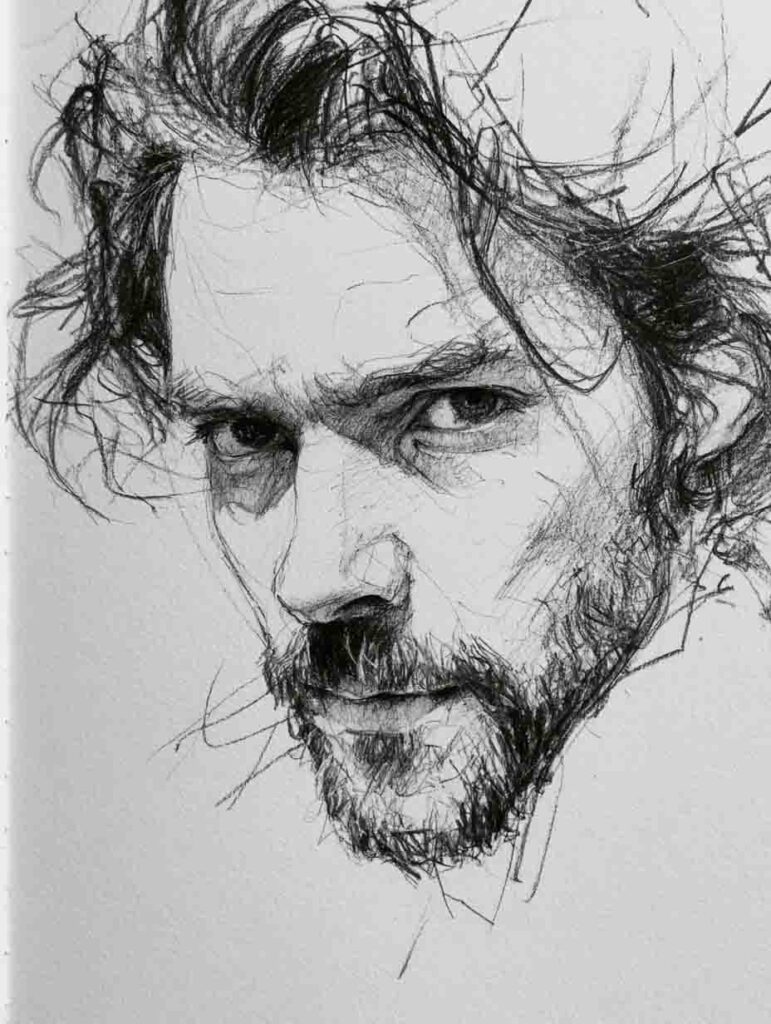
The mark-making here is short and choppy throughout, the beard and hair are built from quick, repeated jabs of the pencil rather than long flowing strokes, giving both a coarse, bristly texture.
That same choppy energy carries into the loose lines escaping the top of the head, keeping the whole sketch feeling slightly unsettled.
Yet the brow and eyes are shaded with much smoother, more gradual tonal builds, creating a stillness in the gaze that cuts through the surrounding roughness.
Number Seven
Here, the technique relies on long, sweeping diagonal lines to carve out the hat and shoulders, giving the piece a strong sense of direction and movement.
In contrast, the face is built with finer, more delicate strokes, gently mapping out the smile lines and soft folds of skin with real warmth.
The heavy block shading around the neck grounds the sketch, balancing out the airy, almost wind-blown linework surrounding it.

Number Eight
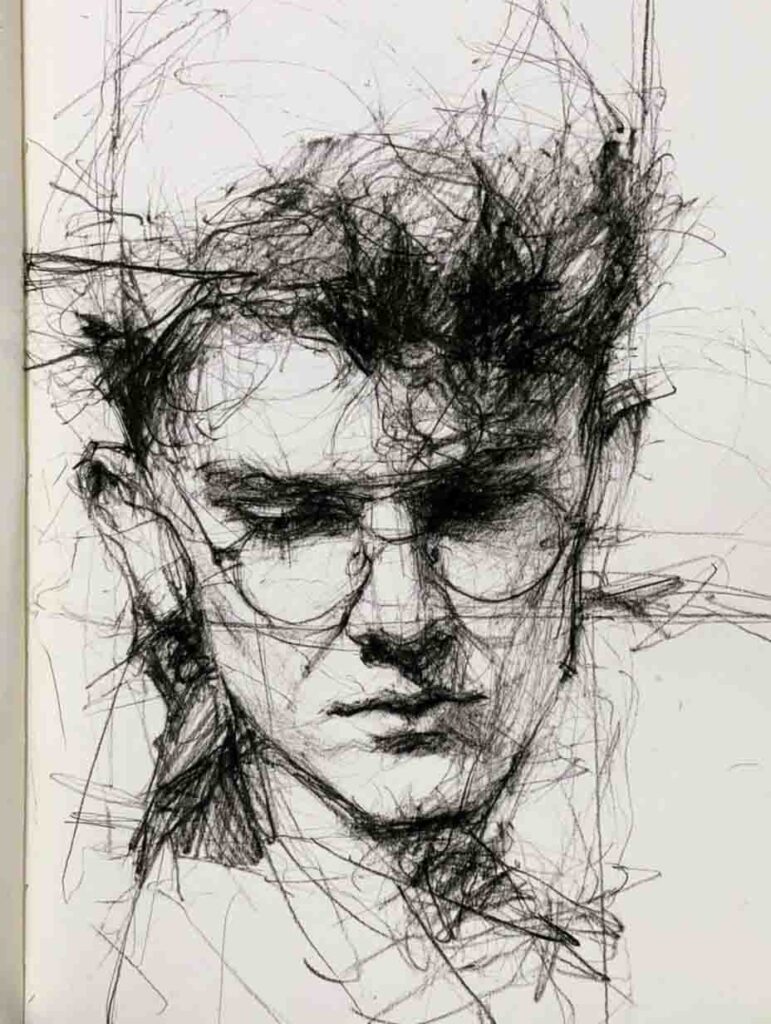
This drawing leans almost entirely on dense, overlapping scribbles, there’s barely a clean line anywhere, even the glasses are sketched in with the same loose, repetitive strokes used for the hair.
Horizontal lines slash right across the face, ignoring the contours beneath them, which gives the piece a deliberately unfinished, almost frantic quality.
It’s a good example of using sheer density of marks, rather than precision, to build up form and shadow.
Number Nine
This sketch contrasts a softly downcast face with a wildly tangled mass of hair, built up through frantic, overlapping scribbles that seem to swirl in every direction.
The shoulders and clothing are reduced to bold, angular zigzags, almost abstract compared to the careful shading on the cheek and lips.
That tension between the loosely gestured edges and the tenderly rendered face gives the piece a quiet, introspective mood despite all the surrounding energy.

Number Ten
This last sketch shows sharp diagonal hatching dominating the piece, cutting across the jaw, neck, and even the moustache in confident, repeated strokes rather than soft shading.
The face holds a slightly more rigid structure, with angular lines defining the cheekbone and brow, while a few bold loops and flicks beneath the chin add a loose, sketchbook-like energy.
It’s a strong example of how directional strokes alone can suggest both form and mood without any blending at all.

From quiet, gestural studies to dense, scratchy linework, these 10 sketches show just how many directions a single portrait can take.
What ties them all together isn’t precision, it’s confidence: the willingness to let lines stay loose, layered, and a little unpredictable.
Hopefully they’ve sparked a few ideas for your own sketchbook, sometimes the most expressive portraits come from letting go of the eraser and trusting the process.
If you liked this post, be sure to check out some of our other drawing posts below:
How To Draw A Hibiscus: Step by step.
19 Creative Sketchbook Ideas For Artists.
10 Simple Flower Drawings : Step-by-Step Guides for Stunning Floral Doodles.